
Premium Offshore Web Design Partner in India
How TechTipsTool supports agencies as a premium offshore web design partner in India with strategy, design, SEO-ready builds and a free 48-hour mockup.
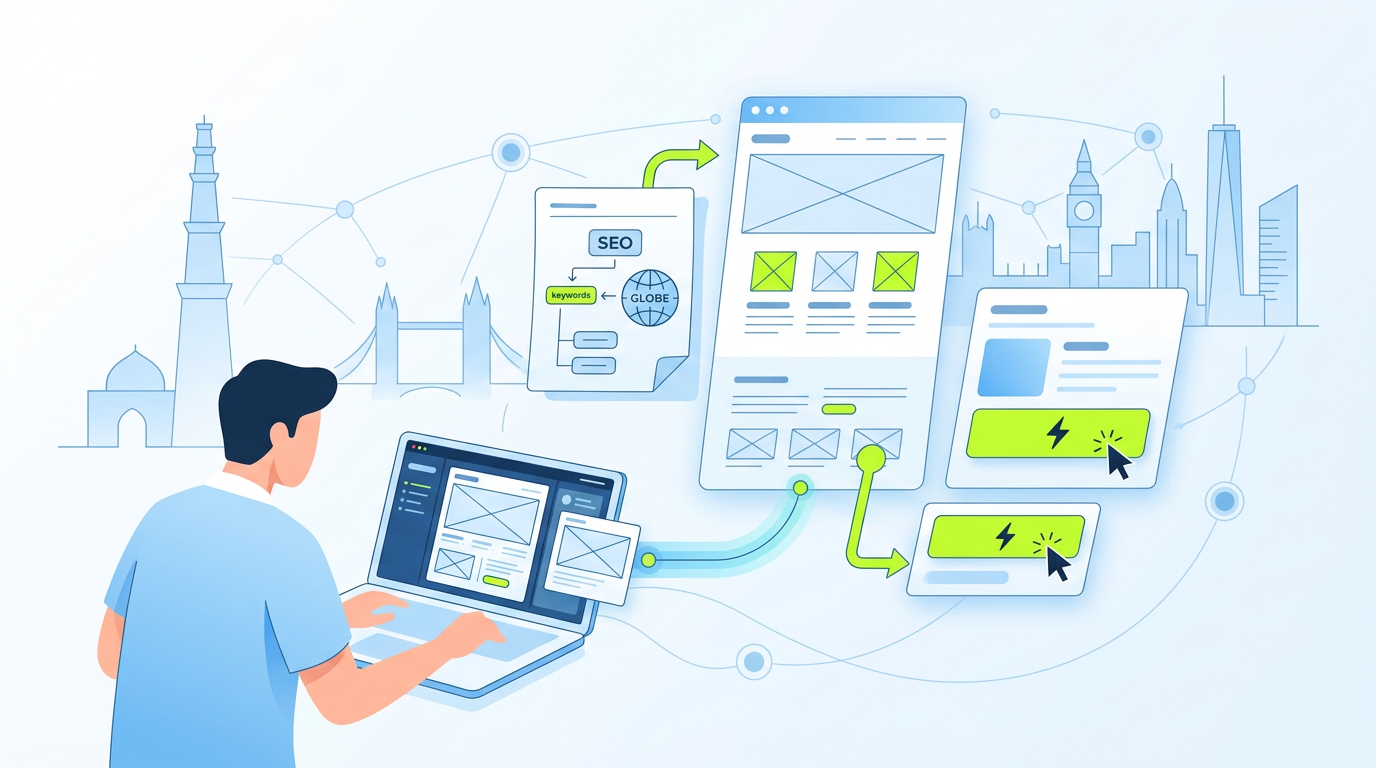
If you need a premium offshore web design partner in India, TechTipsTool works best as a strategy-led production arm for agencies, not a low-cost task vendor. I help US, UK, Australia, Gulf and Indian teams design, build, optimise and hand over conversion-focused websites, starting with a free 48-hour mockup before any paid commitment.
The direct answer: what a premium offshore partner actually means
A premium offshore partner is not someone who “takes PSDs and makes pages.” That is cheap outsourcing, and it usually creates more management work than it removes.
The partner model I use at TechTipsTool is different:
- I understand the client’s business goal before touching design.
- I create a first-direction mockup within 48 hours.
- I build with performance, SEO structure and conversion paths in mind.
- I communicate like an extension of your agency, not like a hidden vendor.
- I hand over files, access, documentation and next-step SEO recommendations.
For agencies, the real value is not just saving money. It is protecting margin while increasing output quality and delivery speed.
A cheap web designer saves you money on the invoice; a premium offshore partner saves you money on rework, missed deadlines and client churn.
I am based in Delhi, but most projects I build are planned for clients who sell in competitive markets: India, the US, UK, Australia and the Gulf. That matters because the expectations are different. A local NGO site in Delhi, a travel website for Indian customers and a lead-generation site for a UK consultant all need different trust signals, page structures and content depth.
You can see examples in my portfolio, including NGO, salon, travel, education, student resource and utility platform builds.
Why agencies outsource web design to India, and where cheap outsourcing fails
Agencies usually come to offshore partners for one of five reasons:
- Their internal team is overloaded.
- They need better margins on fixed-fee website projects.
- They want specialist delivery without hiring full-time staff.
- They need a timezone overlap that allows overnight progress.
- They want to offer design, SEO and development together without building every department in-house.
India is attractive because the talent pool is large and the cost base is lower than the US, UK or Australia. But lower cost is not the same as low quality. The problem starts when agencies choose purely on hourly rate.
Cheap outsourcing often fails in predictable ways:
- The designer waits for instructions instead of identifying gaps.
- The build looks acceptable on desktop but breaks on mobile.
- Pages are visually busy but do not guide users to enquiry, booking or purchase.
- SEO basics are missing: headings, internal links, schema, indexability, metadata.
- No one owns QA.
- The agency becomes the project manager, strategist, copy editor and tester.
That defeats the purpose.
I have seen agencies try to save $300 on production and then spend 12 internal hours fixing layout, copy hierarchy and mobile issues. If your account manager costs even $40/hour internally, that is $480 of hidden cost before the client even sees the site.
Offshore design only works when the partner reduces management load, not when they become another task to manage.
On a recent build for a Delhi NGO, the important work was not just putting donation and service pages online. It was making the homepage understandable for local visitors, adding clear programme sections, structuring contact paths and keeping the site easy for the organisation to update after launch. That same thinking applies when I support agencies: the website has to work after handover, not just look good in a screenshot.
If you want a broader cost comparison, I have already broken down website budgets in the US versus India here: What a Conversion-Focused Website Costs in the US vs India. This article is about the partner model behind those numbers.
The TechTipsTool partner model: strategy, design, build, SEO and handover
My agency partner process is designed for projects where the website must generate leads, enquiries, bookings, donations, calls or sales. I do not treat web design as decoration.
The usual delivery flow looks like this.
1. Brief and conversion goal
Before design, I want to know:
- What is the client selling or promoting?
- Who is the buyer or visitor?
- What action should the user take?
- What pages are required at launch?
- What proof assets exist: reviews, case studies, certificates, team photos, media mentions?
- What does the agency want to own versus hand off?
For a salon site like Buddha Beauty Point, the goal is different from an NGO site like Sarv Dharam Sewa Sangh. A salon needs services, location trust, gallery, call/WhatsApp CTAs and easy booking paths. An NGO needs mission clarity, donation trust, programme pages and credibility signals.
2. First mockup in 48 hours
I create a focused mockup of the key page, usually the homepage or one important landing page. This is not a full website. It is a risk-reduction step.
It helps answer:
- Does the visual direction fit the client?
- Is the offer clear above the fold?
- Are the CTAs strong enough?
- Does the agency trust the execution style?
- Is this worth turning into a full paid engagement?
3. Design system and page expansion
Once approved, I expand the direction into the remaining page templates. For most agency websites, this includes:
- Homepage
- About page
- Service pages
- Contact page
- Blog or resource template
- Landing page template
- Legal pages if needed
- Case study or portfolio template
I usually design in Figma, then build in WordPress 6.x, Elementor Pro 3.x, Gutenberg, Shopify or a custom stack depending on the project. For many small and mid-size business websites, WordPress still gives the best mix of speed, client editability and cost control. For e-commerce, I usually compare Shopify against custom before recommending anything. I wrote a separate guide on that here: Shopify vs Custom E-commerce in India.
4. SEO-ready build
I do not sell web design and SEO as two disconnected jobs. Even if the agency handles SEO internally, the build should not block rankings later.
Standard SEO-ready work includes:
- Clean URL structure
- One clear H1 per page
- Logical H2/H3 hierarchy
- Metadata fields
- Image compression and alt text guidance
- Internal linking areas
- Schema where relevant
- Sitemap and robots.txt checks
- Google Search Console and GA4 readiness
- Core Web Vitals review using PageSpeed Insights and Lighthouse
For SEO direction after AI search changes, I recommend reading my guide on SEO services in India in 2026 and the newer AEO/GEO piece on getting cited by AI systems: AEO & GEO in 2026.
5. QA, launch and handover
Before handover, I check:
- Mobile, tablet and desktop layouts
- Forms and notifications
- WhatsApp/call links
- Speed basics
- Broken links
- 404s
- Favicon and social preview
- Basic indexability
- Admin access and user roles
- Backup and plugin status
For agency work, I can hand over directly to the agency or support a client-facing handover under your brand.
A website is not finished when the design is approved; it is finished when the client can use it without breaking it.
How the free 48-hour mockup removes risk before you commit
The free 48-hour mockup is my strongest filter. It protects both sides.
For agencies, it answers a simple question: “Can this partner understand the brief and produce something we would confidently show a client?”
For me, it shows whether the project has enough clarity to succeed.
Here is how it usually works:
- You send a short brief, existing website or reference links.
- I ask only the questions needed to avoid wrong direction.
- I create one focused mockup within 48 hours.
- You review design direction, structure and conversion thinking.
- If it fits, we discuss full scope and pricing.
- If it does not fit, you do not pay.
This is not a trick where the “free mockup” is a generic template with your logo added. I use it to show thinking: hero message, section order, CTA placement, trust blocks, content hierarchy and visual tone.
I would not recommend free mockups for large enterprise websites with weeks of discovery, legal review and multiple stakeholder groups. In those cases, a paid discovery sprint is more realistic. But for agency websites, local business sites, service brands, campaign landing pages, NGO sites and small e-commerce builds, a 48-hour first direction is usually enough to test fit.
A good mockup should answer three things fast:
- Is the positioning clear?
- Is the design credible?
- Is the page likely to convert?
For a travel project like Luft Holidays, the mockup direction would focus on destinations, trust, itinerary clarity and enquiry flow. For a utility platform like FormSarthi, the focus shifts to usability, search paths, eligibility filters and repeat visits.
The 48-hour mockup is not free labour; it is a practical way to remove uncertainty before scope, budget and timeline are locked.
If you want to start there, the next step is simple: send the brief through the contact page and ask for a free 48-hour website mockup.
Premium offshore vs cheap freelancer vs local in-house hire: cost, speed and control
Here is the honest comparison agencies should make. These are realistic ranges, not universal prices. Verify local hiring numbers using Indeed, Glassdoor, LinkedIn salary data or your own market benchmarks because costs shift by city, skill and seniority.
| Option | Typical cost range | Best for | Speed | Control | Hidden risk |
|---|---|---|---|---|---|
| Cheap offshore freelancer | $8–$20/hour or ₹700–₹1,700/hour | Small tasks, minor edits, overflow | Fast to start, inconsistent to finish | Low to medium | Rework, weak QA, poor communication |
| Premium offshore partner in India | $800–$4,500/project or ₹65,000–₹3,75,000/project | Agency websites, SMB sites, landing pages, SEO-ready builds | 48-hour mockup, 2–6 week builds | Medium to high | Requires clear brief and access |
| Local US/UK freelancer | $50–$150/hour | Strategy-heavy or local-market projects | Depends on availability | Medium | Higher cost, limited capacity |
| In-house designer/developer | $50,000–$100,000+/year equivalent in US/UK markets | Ongoing volume and internal product work | High after hiring | High | Salary, management, idle time, benefits |
| Full local agency | $5,000–$50,000+ per site | Enterprise, heavy brand strategy, complex integrations | Slower discovery, strong process | High | Expensive for standard builds |
For TechTipsTool agency partner projects, smaller landing pages or one-page websites can sit around $300–$800 / ₹25,000–₹65,000 depending on scope. Standard business websites often range from $800–$2,500 / ₹65,000–₹2,10,000. More complex builds with custom structure, SEO planning, content templates or platform logic can move into $2,500–$6,000+ / ₹2,10,000–₹5,00,000+.
For India-only clients, I also maintain practical budget guidance on the pricing page and in this breakdown: How Much Does a Website Cost in India in 2026?.
The trade-off is clear: if you only need someone to resize images or duplicate pages, a cheap freelancer can be enough. If the client’s outcome matters and your agency reputation is attached to it, the premium partner model is safer.
I would not recommend hiring a premium offshore partner for:
- A one-hour CSS fix with no future work
- A project where the client has no content, no decision-maker and no deadline
- A build where the agency wants unlimited revisions for a fixed low fee
- A complex SaaS app that needs full product engineering, not website execution
- A compliance-heavy enterprise project without paid discovery
The lowest quote is not the cheapest option if your team has to rebuild half the project.
What agencies can white-label, co-brand or hand off to us
Different agencies need different visibility levels. I am flexible, but the operating model should be decided at the start.
White-label delivery
In white-label mode, your agency owns the client relationship. I work behind the scenes.
This suits:
- US/UK agencies with existing retainers
- Design studios that need WordPress or Shopify build support
- SEO agencies adding website redesigns
- Paid ads agencies needing landing pages
- Consultants who need a trusted fulfilment partner
Deliverables can include Figma files, WordPress builds, landing pages, blog templates, technical SEO fixes, speed improvements and handover videos under your process.
Co-branded support
In co-branded mode, I can join selected calls as a specialist. This works when the client benefits from hearing directly from the designer/developer, but your agency still leads strategy and account management.
This is useful for:
- Explaining technical constraints
- Presenting design logic
- Handling launch questions
- Reviewing SEO foundations
- Planning future growth pages
Direct handoff
Some agencies prefer to introduce TechTipsTool after strategy is complete. In that case, I work directly with the client on execution while keeping the agency informed.
This suits:
- Smaller agencies without delivery bandwidth
- Consultants who want to refer a build partner
- International teams with India-based clients
- NGOs, education projects and local business builds
You can review my current services to see where I fit best: web design, SEO consulting, conversion-focused redesigns, WordPress development, landing pages and growth-ready site structures.
Typical agency deliverables include:
- Figma homepage mockup
- Full website UI design
- WordPress or Shopify build
- Landing page build
- Mobile-responsive layouts
- Lead form setup
- WhatsApp/call CTA setup
- Blog/resource structure
- Basic on-page SEO
- Technical launch checklist
- Client handover guide
- Optional post-launch SEO support
For content-led projects, I also look at how the site can become a utility or resource, not just a brochure. My work on platforms like NotesBhandar and FormSarthi shaped how I think about repeat visitors, page templates and search-led architecture.
How we manage time zones, revisions, QA and client communication
Time zones are not a problem if the process is clear. They become a problem when nobody knows who replies, who approves and what “done” means.
For US and UK agencies, the India time zone can be an advantage. You can send feedback at the end of your day, and I can move the project forward during my workday. For Australia and the Gulf, overlap is usually easier.
I have a separate detailed playbook on timezone work here: Working With an Offshore Web Partner Across Time Zones. The short version is below.
Communication rules that work
I prefer:
- One project owner from your agency
- One shared task board or document
- Written feedback instead of scattered voice notes
- Loom videos for visual changes
- Weekly milestone check-ins for multi-week projects
- Clear approval deadlines
Tools I commonly work with:
- Figma for design review
- WordPress 6.x and Elementor Pro 3.x for many builds
- Shopify for e-commerce when it fits
- Google Drive for assets
- Trello, Notion, ClickUp or Asana for tasks
- Loom for walkthroughs
- GA4 and Google Search Console for tracking readiness
- PageSpeed Insights, Lighthouse and GTmetrix for performance checks
Revision structure
A normal agency project should not have unlimited revisions. That sounds client-friendly but usually creates confusion and scope creep.
A cleaner structure is:
- Round 1: Direction and structure
- Round 2: Visual polish and section-level changes
- Round 3: Final corrections before build or launch
Small fixes after launch are normal. Rewriting the offer, changing the brand direction or adding five new pages is new scope.
QA checklist agencies can use before approving launch
- Homepage headline explains the offer in plain language.
- Primary CTA is visible above the fold on desktop and mobile.
- Phone, email, WhatsApp and forms are tested.
- Every service page has a clear next step.
- Mobile spacing, menus and buttons are checked manually.
- Images are compressed and not uploaded at unnecessary sizes.
- H1, H2 and metadata fields are set.
- Sitemap is generated and ready for submission.
- No important page is accidentally set to noindex.
- 404 page, favicon and social sharing preview are checked.
- Analytics and Search Console access are confirmed.
- Admin access and backup process are documented.
- Client knows how to edit basic content without breaking layouts.
This checklist prevents most avoidable launch problems. It is not glamorous, but it protects your agency.
On NGO and small business builds, I have learned that the handover matters as much as the design. Many clients do not have an internal tech team. If the website needs a developer for every text change, it becomes a burden. That is why I build editable sections where possible and keep backend complexity realistic.
Good offshore delivery is 50% design skill and 50% operating discipline.
The bottom line
If your agency wants a premium offshore web design partner in India, do not hire only for the lowest hourly rate. Hire for judgment, delivery discipline, SEO awareness, communication and the ability to reduce your workload.
TechTipsTool is a good fit when you need a reliable Delhi-based partner for conversion-focused websites, landing pages, WordPress builds, SEO-ready structures and white-label execution.
The next step is low-risk: send your brief through the contact page and ask for a free 48-hour website mockup. If the direction works, we scope the full project. If it does not, you do not pay.
FAQ
Is TechTipsTool a white-label web design partner for US and UK agencies?
Yes. TechTipsTool can work as a white-label web design partner for US, UK, Australia, Gulf and Indian agencies. Your agency can own the client relationship while I handle design, build, SEO-ready structure, QA and handover behind the scenes.
How does the free 48-hour website mockup work?
You send a short brief, reference websites, brand assets if available and the main business goal. I create one focused mockup, usually for the homepage or landing page, within 48 hours. If the direction fits, we discuss the full scope and pricing; if not, there is no paid commitment.
What does a premium offshore web design partner in India cost?
For TechTipsTool-style agency projects, simple landing pages may start around $300–$800 or ₹25,000–₹65,000. Standard business websites often fall between $800–$2,500 or ₹65,000–₹2,10,000, while more complex builds can go above $2,500–$6,000 or ₹2,10,000–₹5,00,000. Final pricing depends on page count, content, design depth, SEO work, integrations and revision scope.
Will clients know the work is being done offshore?
That depends on the model you choose. In white-label projects, I work behind your agency and the client does not need direct contact with me. In co-branded or direct handoff projects, I can join calls, explain design decisions and support launch communication openly.
What types of agency projects should not be outsourced?
I would not outsource projects with unclear ownership, no content direction, heavy legal/compliance risk or complex product engineering needs unless there is paid discovery first. I also would not recommend outsourcing if the client expects unlimited revisions on a fixed low budget. Offshore works best when the brief, decision-maker and approval process are clear.
How do you handle revisions, QA and time zone differences?
I usually structure revisions into clear rounds: direction, polish and final corrections. QA covers mobile layouts, forms, speed basics, SEO fields, indexing checks, analytics readiness and handover access. For time zones, I rely on written feedback, Loom videos, shared task boards and milestone check-ins so work can move forward while your team is offline.
Work with me
Want the same for your business?
I help founders in India and worldwide ship fast, SEO-ready websites that rank on Google — and get cited by AI search.
Start a projectKeep reading
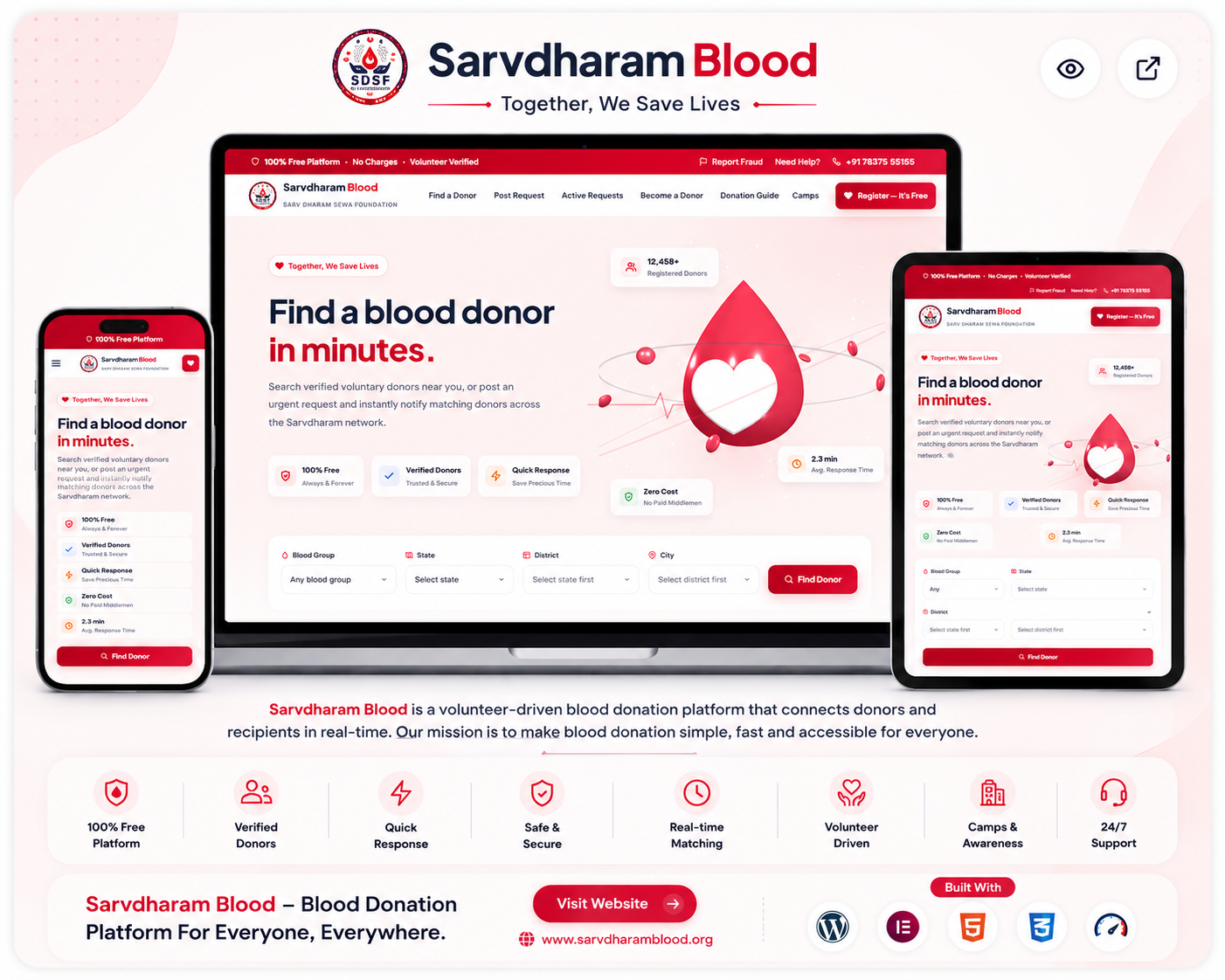
NGO Website Design in India: 4 Real Projects We Built (With Live Links)
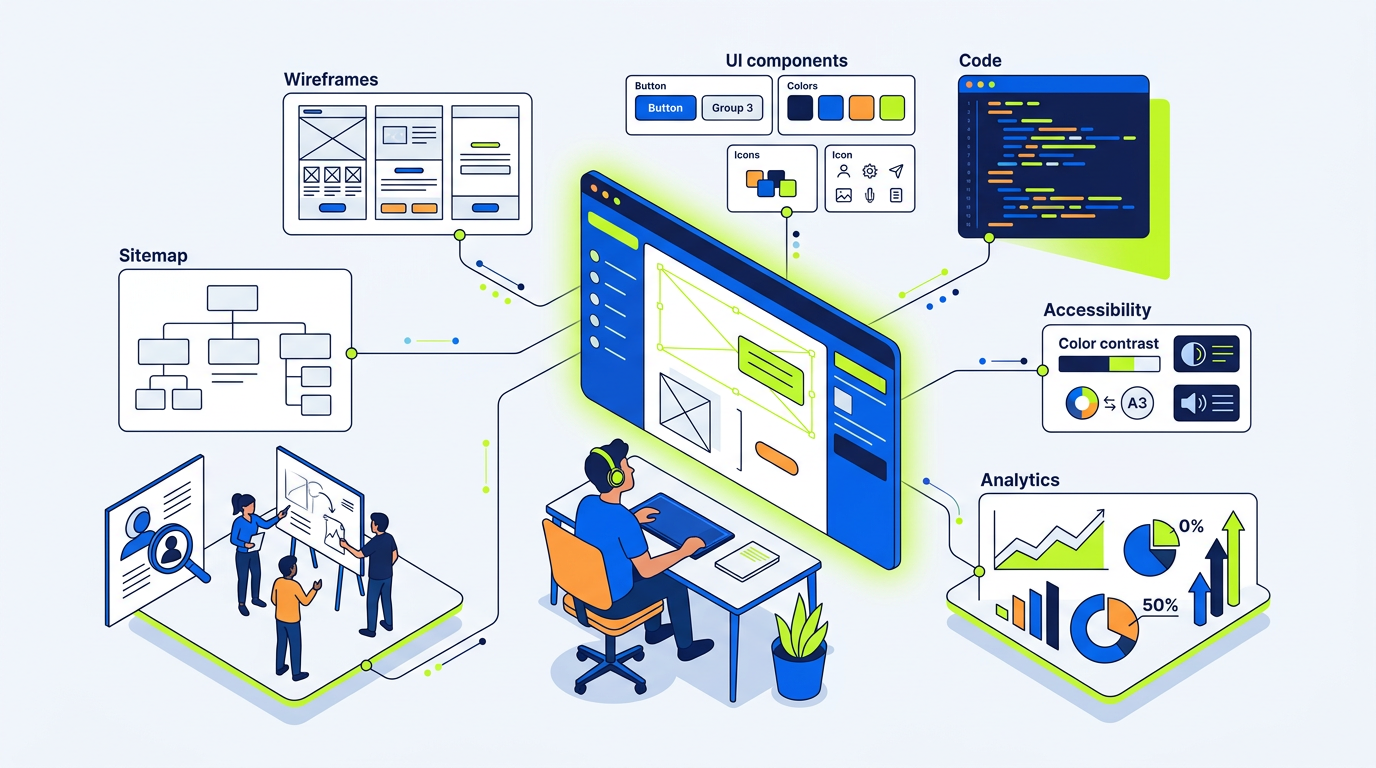
17 Best AI Web Design Tools for Agencies in 2026
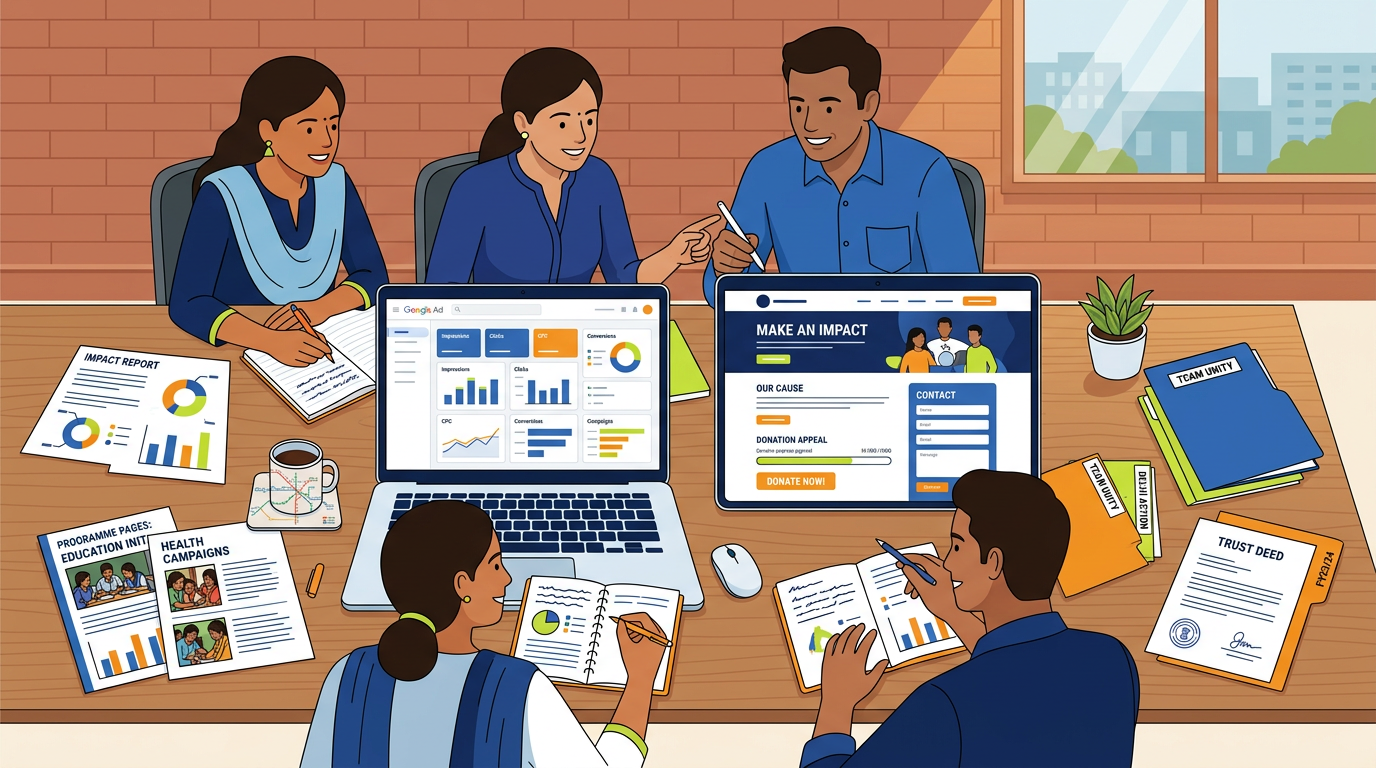
Google Ad Grants for Nonprofits in India: Website Readiness Guide
The Agentic Web Is Here: What Chrome's 2026 Agent Features Mean for Your Website

How to Hire a Web Designer in Delhi in 2026 (Without Wasting Lakhs)