
Building Content & Utility Platforms That Rank: NotesBhandar and FormSarthi Case Study
How we built two search-first platforms — a Delhi University study hub pulling 1k+ monthly organic visitors and a government-job eligibility finder — and the SEO architecture that makes pages like these rank.
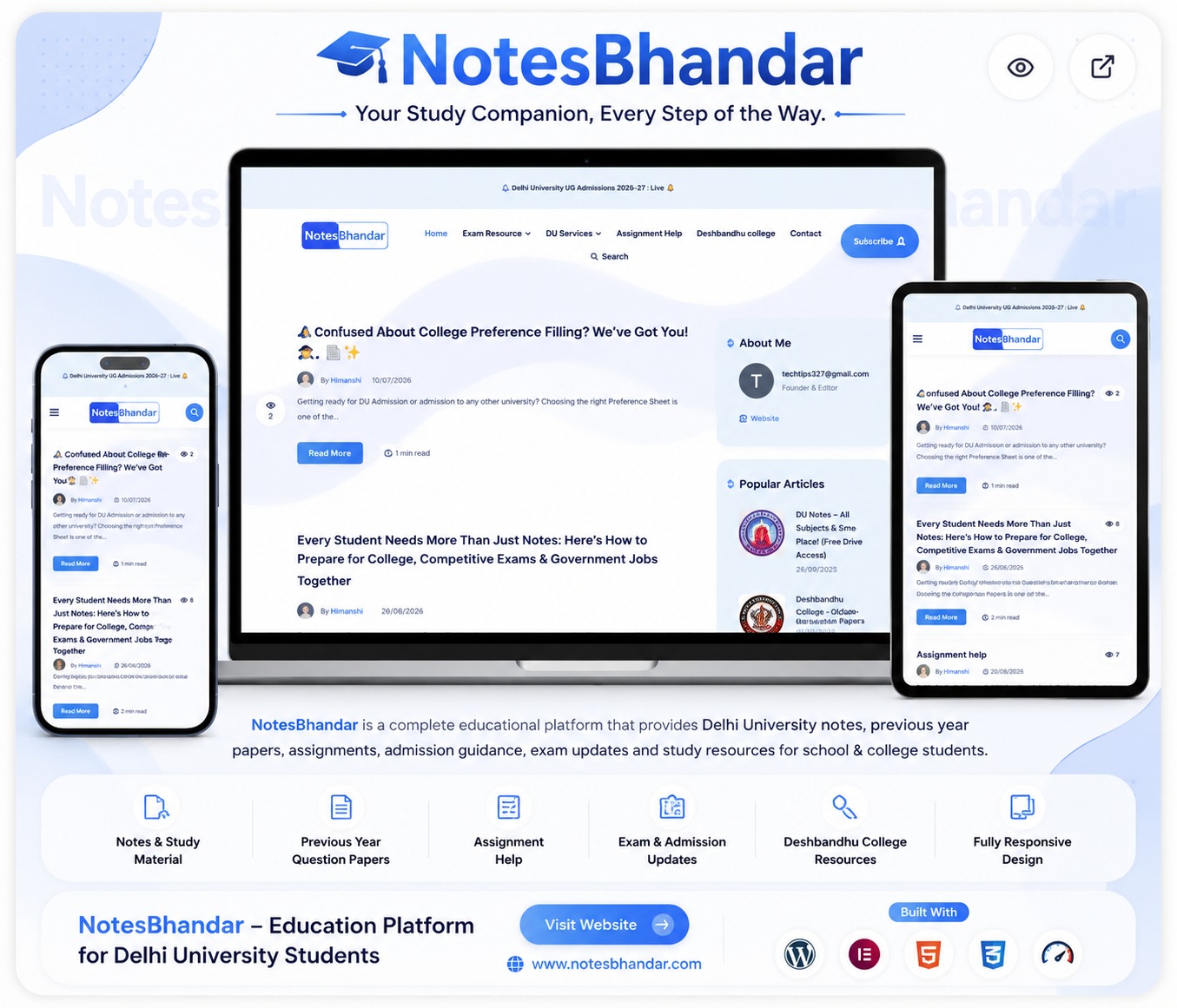
Short answer: Content and utility platforms rank because of architecture, not because of more blog posts. Give every meaningful query its own crawlable URL, keep the template genuinely useful, add the right schema, and let internal linking distribute authority. Here are two live platforms we built that do exactly that.
Key takeaways
- One intent = one URL. If users search it, it needs a page.
- Utility beats prose: a tool that answers a question outranks an article describing the answer.
- Structured data (
FAQPage,ItemList,Dataset,Article) is what makes these pages quotable by AI search. - Internal linking is the cheapest ranking lever most platforms never pull.
1. NotesBhandar — Study Resource Hub for Students
Live site: notesbhandar.com Case study: Read the full project
The challenge
Delhi University students hunt for notes and previous-year question papers across scattered Telegram groups and Drive links. The material exists; it is just not findable. The opportunity was pure search intent — thousands of students typing very specific queries every exam season.
What we built
- A structure organised the way students actually search: course → semester → subject → resource type
- Separate crawlable pages for notes and PYQs rather than one giant dump page
- Fast downloads and phone-first layouts, because this traffic is almost entirely mobile
- Clean metadata on every resource page so Google understands the course, semester and subject
The result
| Metric | Outcome |
|---|---|
| Monthly visitors | 1k+ organic, DU-focused |
| Resources published | 50+ free notes, PYQs & guides |
| Coverage | PYQs & notes across all DU courses and semesters |
Why it works
Search demand for "DU BCom 3rd sem previous year paper" is small but sharply intended. Hundreds of small, precisely-targeted pages beat one broad page every time. This is programmatic SEO done honestly: each page exists because a real query exists, and each page actually delivers the thing.
2. FormSarthi — Find Government Jobs You Are Eligible For
Live site: formsarthi.com Case study: Read the full project
The challenge
India's government job ecosystem publishes thousands of notifications across dozens of portals. Aspirants waste hours reading PDFs to discover they were never eligible. The problem is not information scarcity — it is filtering.
What we built
- An eligibility-driven matching flow: enter qualification, age and category, get only the jobs you can actually apply for
- Individual pages per job notification so each one can be indexed and shared
- A repeatable listing template with dates, eligibility and official links laid out identically every time
- A publishing workflow that lets the team add notifications quickly without a developer
Why it works
A utility page answers the query and keeps the user on site. That combination — high task completion, low pogo-sticking — is exactly the behavioural signal search engines reward. It is also the kind of page ChatGPT and Gemini summarise, because the information is structured, dated and unambiguous.
The SEO architecture we use for platforms like these
If you're building anything with more than 50 pages, this is the playbook.
1. URL structure mirrors user intent
/course/semester/subject or /jobs/qualification/state. Predictable, readable, hierarchical. No query-string-only pages that Google may ignore.
2. Templates, not one-offs
Every page type gets one template with slots: H1, summary, structured facts, body, related links. Consistency is what lets you scale to hundreds of pages without quality collapse.
3. Structured data on every template
ItemListfor listing pagesFAQPagefor question sectionsArticle/Datasetwhere appropriateBreadcrumbListon deep pages
This is the single biggest lever for AI-search citations in 2026.
4. Aggressive internal linking
Related subjects, sibling semesters, similar notifications. Every page should link to at least three others and be linked from at least three. This is how new pages get discovered within days instead of months.
5. A dynamic sitemap
The sitemap must be generated from the database, with a real lastmod per URL. Static hand-written sitemaps go stale the day after launch.
6. Real speed budgets
These audiences are on mid-range Android phones on mobile data. Under 2.5s Largest Contentful Paint is a requirement, not a stretch goal.
7. Thin-page discipline
Never publish a URL that offers nothing. If a subject has no resources yet, don't ship the page. Mass thin pages are the fastest way to sink a whole domain.
What this means for your business
You don't need to be an education portal for this to apply. Any business with repeating entities — locations, services, industries, products, use cases — can build the same structure:
- A multi-city service business → one page per city + service
- A B2B SaaS → one page per integration and per use case
- An agency → one page per service and per industry served
That is how you go from a 6-page brochure site to a compounding organic asset.
Want a platform like this built?
We handle the whole thing: information architecture, templates, development, schema, sitemap, Search Console setup and content operations. See our services, review pricing, browse more work, or book a call.
FAQ
What is programmatic SEO?
Programmatic SEO is generating many targeted pages from a structured data source using a consistent template — one page per real search intent. It works when each page is genuinely useful and fails when pages are thin duplicates generated purely for volume.
How many pages do I need to rank?
There is no minimum. What matters is that each page matches a real query and satisfies it better than the current results. Two hundred precise pages will outperform two thousand generic ones.
How long does it take for new pages to get indexed?
With a database-driven sitemap, clean internal linking and Search Console connected, new pages are typically discovered within days. Ranking then depends on competition, usually taking several weeks to a few months.
Does structured data help with AI search engines?
Yes. Schema markup gives ChatGPT, Gemini, Perplexity and Google AI Mode unambiguous facts to quote — dates, eligibility, prices, answers. Structured, question-shaped pages are cited far more often than long unstructured prose.
Can you build this on my existing website?
Usually yes. We audit the current stack and either add the templates and sitemap generation to it or migrate the site if the existing platform can't scale to hundreds of pages performantly.
Work with me
Want the same for your business?
I help founders in India and worldwide ship fast, SEO-ready websites that rank on Google — and get cited by AI search.
Start a projectKeep reading

From Idea to Live Website: 3 Business Sites We Designed (Salon, Travel & Spiritual eCommerce)
NGO Website Design in India: 4 Real Projects We Built (With Live Links)

Is SEO Dead in 2026? The Shift to AI Search and Citations

Google's 2026 Spam Update and the AI-Content Crackdown: What Actually Got Hit
Google Search Console 2026: Connect Social Accounts & Monitor Audience
